

It is widely recognized that for a brand to be globally dominant, it must consider the Chinese market in its business model. With 1.3 billion people experiencing a dramatic rise in wages, and the economy enduring a painful shift away from manufacturing and into an FMCG and service-based economy, the spotlight for the world’s second-largest economy shines on brands. China right now is the land of opportunity for brands. The younger generation is 8 times more likely to graduate college, two times more likely to travel abroad, and is noticeably more discerning, educated, and cosmopolitan. These “brand conscious” decision makers offer significant (and increasing) disposable incomes, and they demand a brand speak to them before they buy.
But entering the Chinese market is complicated: wildly successful brands have all failed in China, including Mattel, eBay, Google, and Home Depot. Why?
Local competition with a higher baseline for market agility swallows up brands not accustomed to quick market cycles. Consumer behavior in China remains shrouded in mystery by unique cultural dynamics. Without the knowledge and toolkit necessary to localize, a brand gets pushed out.
Chinese Brand Naming is one of the most tangible ways to localize. At Labbrand, we believe that brand naming is comprised of specific technicalities.
“Naming is a brand identity vehicle that needs to be legally available for use (the trademark aspect), suitable for different languages (the linguistic aspect), and designed to create a bond with consumers (the rational, emotional, and subconscious response aspect).”
– Vladimir Djurovic, CEO of Labbrand.
Simply stated, the Chinese naming process is an exercise in localization that can make the difference between consumers accepting or rejecting your brand.
But any agency can preach necessity. Here are the six laws of naming explained, with examples to paint a picture.
1. Chinese consumers are increasingly using Chinese brand names when looking for information about a brand.
All over the world, digital advancements are giving consumers the upper hand in their relationship with brands. Nowhere is this more true than in China. The reality is that brands do not control the way consumers look for them online, and Chinese netizens overwhelmingly use their own language when researching brands on search engines, social media and other online channels. With Chinese netizens outweighing the entire population of the United States 2:1 and leading the world in terms of sophistication, online spending and brand engagement; companies would be foolish to forget this simple reality.
2. If a company doesn’t give its brand a Chinese name, someone else will.
Regardless of whether you include it in your entrance strategy, your brand will be given a name in Chinese – be it by your clients, competitors, distributors, or even counterfeiters.
Consider the relatively benign case Labbrand discovered when performing ethnographic research into the luxury market in Tier II cities. A luxury consumer, in describing his affinity for the shoe brand Tod’s, called it 土豆 [tŭ dÒu], the Chinese word for potato and a close phonetic translation. This is likely not the desired brand association for Tod’s.

3. A Chinese name allows a brand to better build and maintain its brand equity.
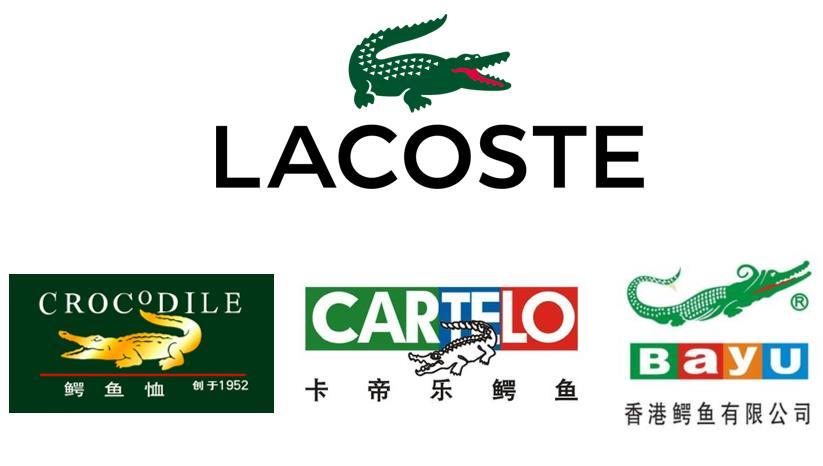
For some companies, failure to localize results in much more dire consequences. Lacoste became extremely popular in China because of its iconic logo and classic polo shirts. However, as the original name is quite difficult for Chinese natives to say, brand recognition was mostly limited to the crocodile icon. This provided an opening for counterfeiters. Failing to register their name or logo in China, competitors popped up all over China imitating the brand, leaving consumers confused about which the real “crocodile brand” is. Lacoste’s iconic crocodile became associated with the word fake – destroying powerful brand equity.
4. A Chinese name, if well developed, can make the verbal identity linguistically appealing and attractive to the target market.
As a verbal identity vehicle, a name draws immediate reactions in the minds of consumers. Harnessing the power of it to work towards your brand essence is the key to effectively explaining your brand in the context of the local market.
LinkedIn experienced early and easy adoption among consumers in China, growing from 4 million users in February 2014 to 13 million users 18 months later – no small task, considering it is the first foreign internet brand to be successful in China. The company’s name was developed to draw associations relevant to its brand personality. (Diagram 1)
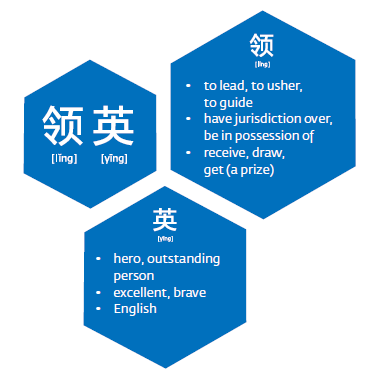
Diagram 1: Ling” strikes a particular chord in the Chinese language: one revolving around leadership, professionalism, and excellence.
By drawing from all these meanings, LinkedIn’s Chinese name solidifies its positioning towards young professionals that strive to be the next wave of China’s leadership. Coupled with the similar phonetic sound, LinkedIn positions itself as being a necessity for anyone in China trying to get ahead.
5. Chinese brand naming is the local embodiment of the brand’s culture, values, personality and vision, which allows for communication on a localized and distinctly cultural scale.
Consider the example of HSBC (Hong Kong and Shanghai Banking Corporation), which first opened its doors in March 1865. Its name could have very easily been directly translated, combining “Shanghai” and “Hong Kong” with “bank”, but the brand decided to go through this process strategically. Its name, 汇丰 [huì fēng], brings to mind great success and prosperity. 汇 [huì] means to exchange, to remit or to accumulate; it also means to converge or flow together. 丰 [fēng] means abundant and plentiful. (Diagram 2)
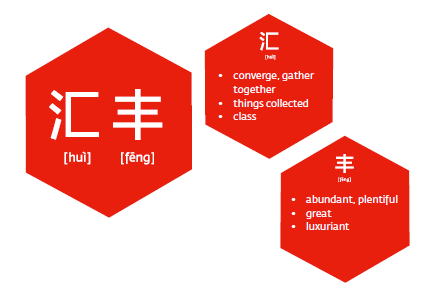
Diagram 2: The name is perceived by many Chinese citizens as auspicious because it implies profitable business exchanges.
By connecting the burning desire for success within the Chinese business world with the cultural tendency to believe in luck and happenstance, HSBC successfully developed a clever name that appeals to its consumers.
6. Finally, the exoticism of foreign names that used to appeal to Chinese consumers is balanced by the risk of being perceived as one of many giant international brands that are distant from Chinese consumers.
Back when foreign brands were first beginning to enter the market, an international name was thought of as luxurious. Many premium brands saw great success capitalizing on this cultural trend; Louis Vuitton, Chanel and BMW were among them. But nowadays the market is saturated with a plethora of foreign brands that do not bring to mind luxurious quality. In order to stay relevant, brands have localized their names – Chanel chose the name 香奈儿 [Xiāng nài ěr], using a close phonetic match that draws upon elegance and international appeal; Louis Vuitton adopted the directly phonetic name of 路易威登 [lù yì wēi dēng]; BMW selected the name
宝马 [băo mă], using a Chinese name drawn from a famous poem that stands for power and strength.

IN SUMMARY
Naming is a tricky business. You must decide your company’s most prominent verbal asset very early on – oftentimes before the brand’s essence or positioning have been cemented. Once this name has been chosen, it is extremely difficult to change. This process is best done cautiously and with respect.
The common practice of Chinese brand naming opens up a unique opportunity for companies seeking to target its 1.3 billion Chinese consumers more precisely. By choosing a Chinese name that embodies your brand’s personality, and by adding a localized cultural flair, you can better communicate, associate, and connect with the enigmatic Chinese consumer.




To improve your experience, we use cookies to provide social media features, offer you content that targets your particular interests, and analyse the performance of our advertising campaigns. By clicking on “Accept” you consent to all cookies. You also have the option to click “Reject” to limit the use of certain types of cookies. Please be aware that rejecting cookies may affect your website browsing experience and limit the use of some personalised features.