

As we step into 2015, much like the debate over whether this lunar year should be dubbed the Year of the Goat, Sheep, or Ram, the business world is engaged in its own deliberations. This strategic decision-making process draws parallels with the dynamic landscape of brand strategy.
Just as the Chinese New Year provides a fertile ground for brands to flourish in terms of sales, customer relationships, and brand awareness, it underscores the importance of a well-crafted brand strategy. Western brands have adeptly adjusted their strategies, developing robust marketing plans to captivate Chinese consumers, especially during the bustling “Golden Week” when shopping takes center stage. Embracing the nuances of cultural celebrations becomes a pivotal element in the broader canvas of brand strategy, ensuring resonance and connection with diverse audiences.
Usually this holiday is an opportunity for those working in the larger cities to go back to their hometowns and be with their families. However, standards of living and incomes have risen in China and as a result more and more families are choosing to celebrate the holiday by traveling to foreign destinations.
While brands have successfully capitalized on the Lunar New Year opportunity within China through a combination of offline and online campaigns, there’s a burgeoning realization of untapped potential beyond China’s borders. Notably, 1.1 million people celebrate the Lunar New Year in Australia, 500,000 in San Francisco (USA), and 460,000 in the UK, with an additional 200,000 Chinese visitors flocking to the UK during this festive season. The scale of this celebration is underscored by the staggering estimate that Chinese tourists would contribute a substantial 5.7 billion US dollars in spending during the Christmas and Chinese New Year season.
Despite this vast opportunity, marketing campaigns beyond China seem to predominantly exist in the offline realm. Surprisingly, brands are yet to formulate a culturally relevant digital strategy on their home ground. This gap presents a significant area for enhancement in the broader context of brand strategy. To fully harness the global potential of the Lunar New Year celebration, brands must extend their digital footprint, crafting strategies that resonate with diverse audiences worldwide. This shift necessitates a comprehensive and adaptive approach to brand strategy that seamlessly integrates both offline and online elements on a global scale.
Brands have adapted offline distribution & marketing to this trend
Brands are celebrating the Lunar New Year outside of China, though a lot of them fail to make the event a reflection of their brand identity and heritage or associate it with their brand core values.
Luxury brands were among the first to leverage the phenomenon and to take actions: teaching their staff Mandarin, offering traditional New Year “Red Envelope” gifts, accepting China Union Pay at their physical points-of-sale, and appealing to the Chinese public on all social media sites. Now hotels and casinos are also gearing up: The 10 Peninsula hotels worldwide prepared seasonal decorations, holiday menus and have organized lion dances. In Las Vegas, the Bellagio has put up impressive decorations:

Across the US Bloomingdale’s has arranged special “Red Envelope” giveaway promotions: Year of the Ram tote bags, beauty promotions, dining discounts and gift cards worth $8, $88 or $888. These promotions are especially significant considering that 8 is the Chinese number for luck. They implemented a strategy aimed specifically at Chinese consumers abroad.
However, brands need to be careful as their marketing has to be culturally relevant and not just about sticking “Happy Chinese New Year” on their products. Nutella has the right idea, dressing up their jars in red tunics and magenta Cheong-Sam. This special packaging is adapted to the event without being exaggerated and creates an emotional connection with the customers.

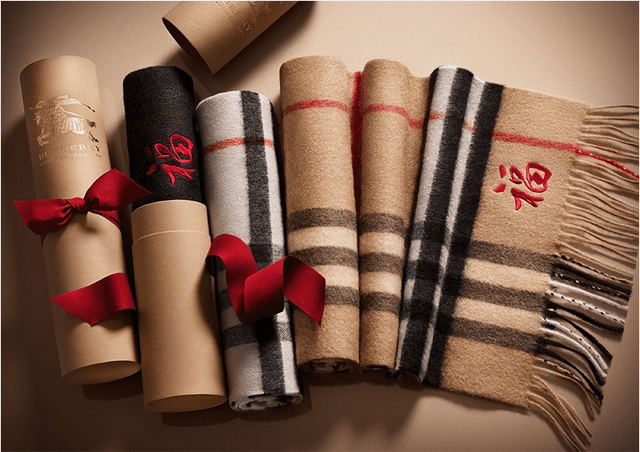
Burberry on the other hand, by simply adding the Chinese character “福” (fú, “good fortune”) on their signature scarves, hoped to attract interest from Chinese shoppers. However, the ‘Fu’ design did not create a great impact among the younger generation of consumers, as it was perceived to be old-fashioned.
The digital world, during the Lunar New Year, is full of opportunities that are neglected by brands
During this grand holiday, the digital world is full of marketing opportunities. In China, WeChat launched a brilliant campaign reinventing the use of “hongbao”, red envelopes filled with cash and created a modern-day mobile gifting craze. However in the west, if the dynamism created by the Chinese New Year is understood in the offline world, the same cannot be said online.
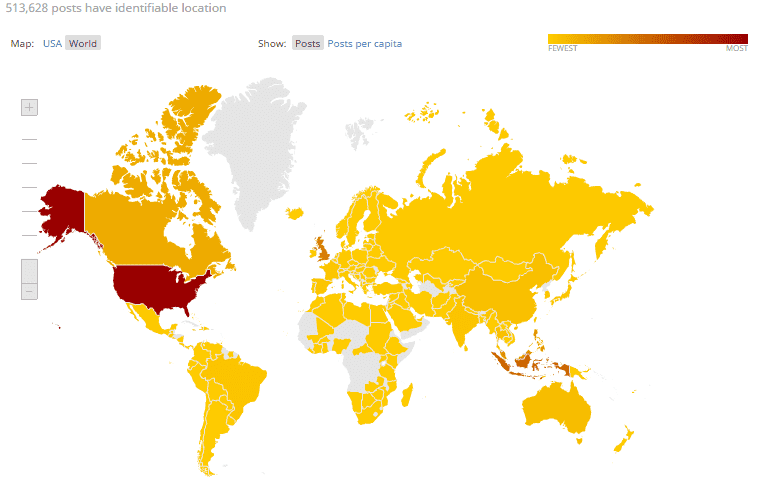
The map below shows the number of posts on Social Media about the Chinese New Year per country. The US, the UK and Indonesia have more posts about the Chinese New Year than other countries. Yet in those countries, a surprisingly small number of social media campaigns have been launched.
British Airways managed to get ahead by starting a Chinese New Year campaign on WeChat last year and gained 10,000 followers during the first 10 days, showing what can be accomplished. Many brands though are still not using digital tools to make the most of this event.
China’s B2C online sales are exploding during CNY but brands fail to offer special online promotions outside China. Brands should have a digital strategy taking into account that the Lunar New Year is now a global event.
What brands could do to maximize impact outside China
The stakes of establishing such a strategy are a market of 5 million of Chinese tourists that have gone on holidays abroad this year, tourists that spend 80% of their budget on shopping, acquiring brand fidelity and a great image of the brand consumers will remember when they go back home.
The question for brands is: what could I do to maximize my brand impact outside China during the Chinese New Year?
In the age of China’s expanding influence, the Lunar New Year holds global sway, demanding brands to adapt swiftly. Superficial celebrations won’t suffice; brands must embrace this as a pivotal global campaign, considering Chinese consumers’ habits and cultural values. It’s a prime opportunity to connect with Chinese consumers, transcending regional bounds and appealing to a broader global audience. In the end, who doesn’t love a reason to celebrate? This paradigm shift underscores the need for a nuanced and global brand strategy that authentically embraces the essence of the Lunar New Year.




To improve your experience, we use cookies to provide social media features, offer you content that targets your particular interests, and analyse the performance of our advertising campaigns. By clicking on “Accept” you consent to all cookies. You also have the option to click “Reject” to limit the use of certain types of cookies. Please be aware that rejecting cookies may affect your website browsing experience and limit the use of some personalised features.