
Decoding the Essence: Báijiǔ Branding Strategy Unveiled
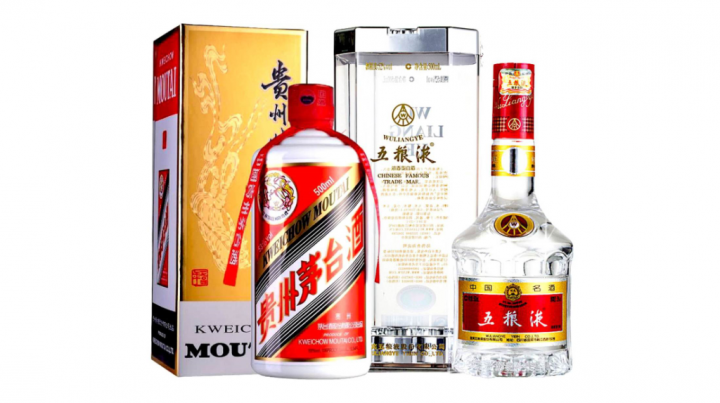
China’s rich tradition of hospitality finds expression in the ritual of toasting with báijiǔ, a traditional distilled alcoholic beverage. Delving into a comprehensive name analysis, we uncover the origins and meanings behind three renowned premium báijiǔ brands. Explore the intricate world of báijiǔ branding strategy, where each name carries a story, encapsulating the essence of Chinese culture and tradition.
Báijiǔ, which literally means “white liquor,” “white alcohol” or “white spirits”, is a clear drink distilled from sorghum. It is often mistakenly translated as “wine” or “white wine,” but actually has a significantly higher “alcohol by volume” (ABV) of 40-60%, compared to hard alcohols such as vodka with ABVs of 35-50%.
Báijiǔ has a long history in China, and has been brewed since the Dong Han Dynasty, about 1,600 years ago. From ancient to modern times, a number of Chinese celebrities and cultural icons have been associated with báijiǔ. For example, a great poet in Chinese history, Li Bai, is often depicted as a drunken poetic genius, with most of his masterpieces composed after he had much to drink. Ever since Libai’s time, báijiǔ has been increasingly accepted as a Chinese cultural symbol.
With its roots in Chinese history, báijiǔ continues to be important in today’s modern Chinese society.

Among all the báijiǔ brands in China, Máotái (茅台), also known as “báijiǔ of the State” , is one of the most popular and is typically served at Chinese State Banquets. The brand name itself “Máotái” is actually the name of a place that is considered to be ideal for báijiǔ brewage in Guizhou Province.
The character for máo (茅) is comprised of the characters cǎo (草), meaning grass, and máo (矛), meaning spear. Máo (茅) is used in the word máowū (茅屋), a thatched cottage, and茅道máodào, a country path. This character gives a sense of nature and ancient times as well as strength and power.
Tái (台) means a platform, stage or terrace, and has the connotation of being established and stable.
Together, these characters embody the long tradition and strength associated with Máotái baijiu.

Another successful báijiǔ brand in China is Jiànnánchūn (剑南春). It is the name of an ancient place in Sichuan Province called Jiànnándào (剑南道”=). Besides the history contained in this name, the character jiàn (剑) means a double-edged sword. It is composed of qiān (佥), which indicates the pronunciation, and dāo (刂), which means knife. By having the character jiàn (剑) in its name, it associates Jiànnánchūn báijiǔ with power and achievement. Here we can see a resemblance to the character máo (矛), used above, also meaning a sword or weapon and having similar connotations.
The character nán (南) simply means “south”, giving the name a geographic element. Chūn (春) is the character for the season of spring, but it can also mean joy, love, lust, life and vitality. For example, qīngchūn (青春) is a noun referring to one’s youth or young adulthood. Chūnjié (春节), is the Spring Festival in China (the Lunar New Year), one of the most significant Chinese Festivals.
These three characters together call on the strength, bravery and power associated with a weapon, the history of a southern place, and the vitality and joy surrounding springtime and youth, to form an evocative and attractive brand name.

The name of Wǔ liáng yè (五粮液), a famous báijiǔ brand produced in Sichuan Province, literally means “a liquid extracted from 5 different grains”.
The character wǔ (五) means five (5). Liáng is a noun for grain, food, or provisions. Liáng is made up of the characters mǐ (米), for rice, and liáng (良), which indicates pronunciation. Liáng is used in such words as liángshi (粮食), meaning grain, cereals, or food, and xìliáng (细粮), a noun for flour and rice.
In this name, as in máo (茅) used above, we see connotations of nature, living off the land, or a countryside lifestyle. Furthermore, by referencing grains and provisions, liáng gives a sense of abundance and harvest. “Wǔ liáng” also refers to the various ingredients and indicates the complex and elaborate production process of this báijiǔ.
Yè (液) means a liquid, a fluid, or a juice. The character is composed of shuǐ( 氵 or 水), meaning water, and yè (夜), which indicates the pronunciation. The character yè (夜) is present in words like xuèyè (血液), or blood, and róngyè (溶液), meaning a chemical solution. By using the character yè (液) as opposed to jiǔ(酒)the name refers to precious and delicious liquors such as in “yùyè” (玉液), meaning “jade liquor”. This combination ascribes distinction to the Wǔliángyè brand.
As you can see, the 5 most premium báijiǔ brand names draw strongly on attributes of tradition or heritage, as well as power and achievement. This may be because the major consumers of báijiǔ in China have traditionally been male. As such, báijiǔ brands are eager to convince customers that by drinking their products, the feeling passed down from ancient times can be tasted, their masculinity can be proven, and their power can be fully demonstrated.
For new alcohol brands wanting to create a Chinese brand name, they may wish to call on characters evoking attributes such as strength and distinction, tradition and history, as well as natural origins, to connect with Chinese consumers.
One can’t help but to wonder, what does the future hold for traditional Chinese báijiǔ? Will the younger generation carry on the báijiǔ tradition, or will some other liquor take its place? With the alcohol industry in China set to experience huge growth in the upcoming years, it will be interesting to see which brands turn out to be the most popular.
Until then, bottoms up!





To improve your experience, we use cookies to provide social media features, offer you content that targets your particular interests, and analyse the performance of our advertising campaigns. By clicking on “Accept” you consent to all cookies. You also have the option to click “Reject” to limit the use of certain types of cookies. Please be aware that rejecting cookies may affect your website browsing experience and limit the use of some personalised features.