

B2B companies rarely lack substance.
They have deep expertise, long-standing client relationships, and the ability to deliver at scale. Yet when viewed from the outside, many look interchangeable. The same claims appear again and again — quality, reliability, innovation, partnership — with little to distinguish one from another.
The issue is not capability. It is translation.
In B2B markets, value is often complex, technical, and distributed across multiple touchpoints. What a company does is not always easy to understand, and even harder to compare. This is where branding plays a decisive role.
Not as decoration, but as a way to turn capability into confidence.

Strong B2B branding does not begin with messaging. It begins with alignment.
In many organisations, different parts of the business hold different versions of the story. Leadership speaks about long-term ambition. Sales focuses on immediate value. Technical teams emphasise capability. Communications translate as best they can.
Individually, each may be accurate. Together, they often feel fragmented.
This is why the first step is not external expression, but internal clarity.
In our work with SD Guthrie, for example, branding did not start with design or campaigns. It started with understanding how R&D saw its own role, how leadership defined innovation, and where misalignment existed between ambition and execution. Through internal audits, stakeholder interviews, and surveys, patterns emerged — not of weak intent, but of unclear articulation and inconsistent communication.
From there, the work moved into defining a clearer vision and narrative — not as a slogan, but as a shared direction that leadership and teams could align around.
Because in B2B, if the organisation itself is not aligned, the market will feel it.
One of the most overlooked aspects of B2B branding is the role of leadership.
A brand is not defined by communications alone. It is shaped by what leadership prioritises, reinforces, and makes visible.
When CEOs and senior leaders articulate a clear direction — what the company is building, why it matters, and how it is different — it creates coherence across the organisation. When that clarity is missing, branding efforts tend to remain surface-level.
This is why stakeholder alignment is central to the process.
In projects such as Infomina Berhad’s re-positioning, aligning on ambition was as important as refining messaging. As the company expanded from technical delivery into higher-value advisory and ecosystem roles, the brand needed to reflect that shift — not just externally, but internally across teams and markets.
Brand strategy, in this sense, becomes a leadership tool. It defines not just how the company is seen, but how it moves.
Before defining a new direction, it is critical to understand the current state.
This is where brand audit research plays an important role (and where many B2B organisations underestimate the need for rigour).
Looking only at external materials — websites, decks, campaigns — gives a partial view. The real picture comes from combining:
In the SD Guthrie work, this multi-layered approach revealed not just messaging gaps, but structural ones: unclear ownership, inconsistent narratives, and a disconnect between long-term ambition and day-to-day communication.
These are not branding “issues” in isolation. They are signals of how the organisation operates.
Understanding them allows branding to move from surface correction to meaningful direction.
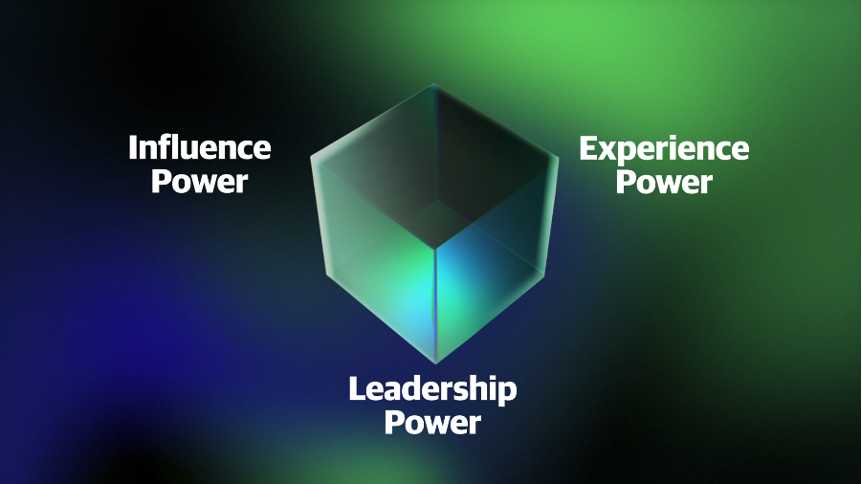
A useful way to understand B2B branding is through three interconnected forces: Leadership, Experience, and Influence.
At the core is Leadership — how clearly the brand defines its vision, positioning, and story. This is where direction is set. Without it, everything else becomes reactive.
Around that sits Experience — how the brand shows up across touchpoints. In B2B, this includes sales conversations, proposals, digital platforms, project delivery, and internal communication. Consistency here builds credibility.
Beyond that is Influence — how the market perceives and recognises the brand. This is shaped not only by communications, but by partnerships, thought leadership, and visible proof of progress.
Strong B2B brands are not built by focusing on one layer alone. They are built by aligning all three.
One of the biggest challenges in B2B branding is turning positioning into something tangible.
A positioning statement may be clear on paper, but unless it translates into how the brand behaves, it has limited impact.
This is where many branding efforts fall short.
In the case of ES Exhibition, the challenge was not a lack of capability, but how that capability was perceived. By reframing the brand around the idea of a “quiet magician” — a partner who handles complexity seamlessly — the positioning created a clearer, more distinctive identity. But more importantly, it guided how the brand showed up: in communication, in design, and in how the company presented its role to clients.
The result was not just a new look, but a shift in how the business was understood.
Unlike consumer brands, B2B brands are built less through campaigns and more through interactions.
They are shaped in:
Each interaction reinforces — or weakens — the brand.
This is why consistency matters. Not uniformity, but coherence. The same core idea should carry through, even as it adapts to different contexts.
The most important shift in B2B branding is moving from what a company does to how it is understood.
Many organisations focus on capability — and rightly so. But capability alone does not guarantee clarity. Nor does it ensure differentiation.
Branding operates in that gap.
At Labbrand Malaysia, B2B branding is approached as a process of:
Because in complex markets, decisions are not made on information alone.
They are made on confidence.
And confidence is built through clarity, consistency, and trust over time.
If your organisation is refining its positioning, aligning stakeholders, or seeking to better reflect its capabilities in how it is perceived, a more structured approach to B2B branding can create clarity and momentum.
At Labbrand Malaysia, we help organisations translate complex capabilities into clear, differentiated brands.




To improve your experience, we use cookies to provide social media features, offer you content that targets your particular interests, and analyse the performance of our advertising campaigns. By clicking on “Accept” you consent to all cookies. You also have the option to click “Reject” to limit the use of certain types of cookies. Please be aware that rejecting cookies may affect your website browsing experience and limit the use of some personalised features.