
Yesterday as browsing through a fashion magazine, I stumbled upon a special feature on LEGO, titled in bold, big font as “Only toy bricks produced by LEGO group are empowered to the name of 乐高 [lè gāo] (joy/ high).” Attached below are the notes stressing that the Chinese name 乐高 is owned by LEGO group, and shall be never subjected to any pirated copy.
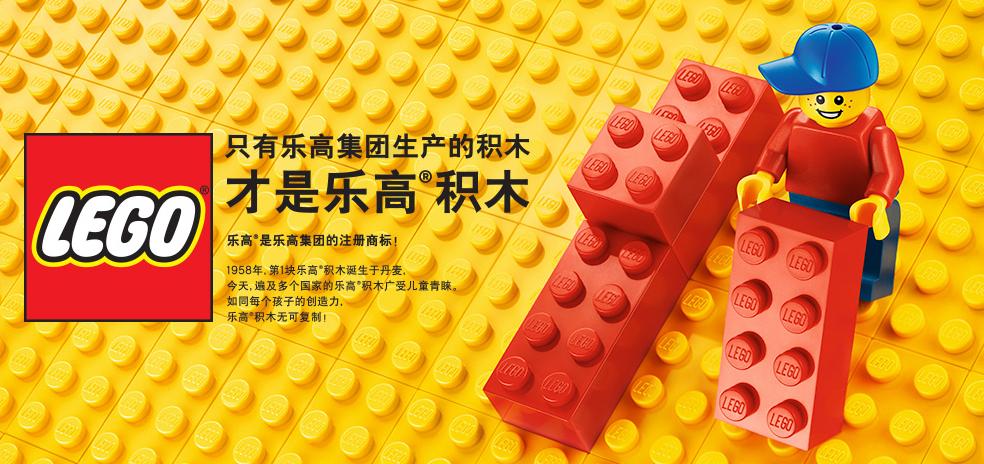
Although it feels quite fresh to see an announcement about brand name ownership slotted into a fashion magazine, the second thought told me that it’s not merely a legal issue, but more of brand awareness trouble showcased by low distinctiveness of the Chinese brand name.
Sometimes innovators are ready to make a big splash with what they invent, yet not with who they are. LEGO is such an example. As early as the 1990’s, LEGO entered the Chinese market, and made its brand-new toy category a real bombshell to local consumers. Fascinated by the colorful possibilities of LEGO toy bricks, Chinese people proved to remember the label 乐高 more as a toy category indicator rather than as an innovative brand’s name. Consequently, over the past decades those copycats enjoyed a ‘justified’ share of LEGO’s halo to the detriment of LEGO’s profit.
From Chinese brand naming perspective, the LEGO dilemma can be diagnosed as verbal identity recognition issue. Generally speaking, lack of distinctiveness results in the low brand recognition and profile. Composed of two easy characters, 乐高 [lè gāo] (joy/ high) says nothing else but great happiness. The name should work well if LEGO is a category follower. Safe and Positive. However, for category innovator and challenger, the abstractness in the name estranges the audience, with little emotional influence. The more neutral it appears at first sight, the more likely consumer consider it to be a general standard or specs. For innovators like LEGO, it’s fatal to have a name that fails to help own the brilliant idea, but suggests LEGO bricks are manufactured by other brands worldwide.
Besides LEGO, UGG, Australian snow boots brand also suffered similar trouble. Chinese consumers, who are new to this exotic wear, tend to believe snow boots are collectively called UGG. Some Chinese local boots makers even tried to cash in on this misunderstanding and claim the trademark of UGG in China. This is also partly caused by the impression that UGG is a general, abstract code.
As foreign brands are growingly conscious of the significance of a good Chinese name, it still needs to be pointed out that distinctiveness shall be given more focus. Not only because it creates a sharper memory, but also poses a protective barrier to your rivals who plan to coast on you.
There are good naming examples LEGO may learn from, like Apple (first tech company named after a fruit) and Tesla (first electronic vehicle brand named after a scientist): the Chinese names are fully kept from original English connotation: 苹果 [píng guǒ] (apple) and 特斯拉 [tè sī lā] (the scientist’s name in Chinese) to ensure the differentiation point is coherently inherited, with brand essence fully transferred through the completely different cultural and linguistic medium. Let alone, brands like Apple and Tesla, thanks to the technological monopoly, could better survive a non-distinctive Chinese name than LEGO could.
So how do we make distinctive names of our own? Here are some tips that may be of help. First of all, for the name to be distinctive doesn’t mean to immediately hunt differentiation from your rivals. It’s about declaration of the brand’s own voice. 乐高 [lè gāo] (joy/ high) is not recognizable because it is silent in telling people the brand’s unique identity. After we have the core brand DNA at hand, then it’s time to collect all the potential creation restrictions, such as industry indicator, phonetic link, length, tonality, etc. The more restrictions we can give green light to, the more space will be allowed for exploring ‘distinctiveness’ from Chinese language aspect. With all the preparation ready, creation work can take off, to make sure the final name has a strong enough character to stay away from category code.
Some might hold that brand name is little more than a signal, and so long as it’s readable and sufficient resources are put for circulation, people will eventually embrace it. While LEGO’s case gives a cautionary lesson: an embracing name alone cannot help the brand reach where it needs to be; an embracing and also empowering name has to be sought, especially when you are the first to land a new market, like the flag placed by Neil Armstrong on the Moon.
Folding the magazine, I was wondering if LEGO would re-discover a new Chinese name for future market which would break down into even smaller segments, requiring brands to be more concentrated on specific needs of a certain consumer group, or it would continue its warpath to the ideological ownership of the Chinese name. Perhaps few could expect beneath a 2-character Chinese brand name there can be 200 things to worry about.




To improve your experience, we use cookies to provide social media features, offer you content that targets your particular interests, and analyse the performance of our advertising campaigns. By clicking on “Accept” you consent to all cookies. You also have the option to click “Reject” to limit the use of certain types of cookies. Please be aware that rejecting cookies may affect your website browsing experience and limit the use of some personalised features.