

Exploring Sound Naming
In 1929, a German psychologist named Wolfgang Köhler conducted a cross-country experiment. The task was simple: when presented with two abstract shapes – one more blob-like and the other spiky – participants had to match the arbitrary words “bouba” and “kiki” to the corresponding shape. This experiment, conducted nearly a century ago, is now globally recognized as the “Bouba & Kiki” Effect. Interestingly, “bouba” consistently matched the round, curvy symbol, while “kiki” was associated with the sharp-angled shape, transcending linguistic differences.
If arbitrary words like ‘bouba’ and ‘kiki’ can evoke such clear associations, it raises the question: How much more can we infer from a brand name based on its sound and sound naming?”
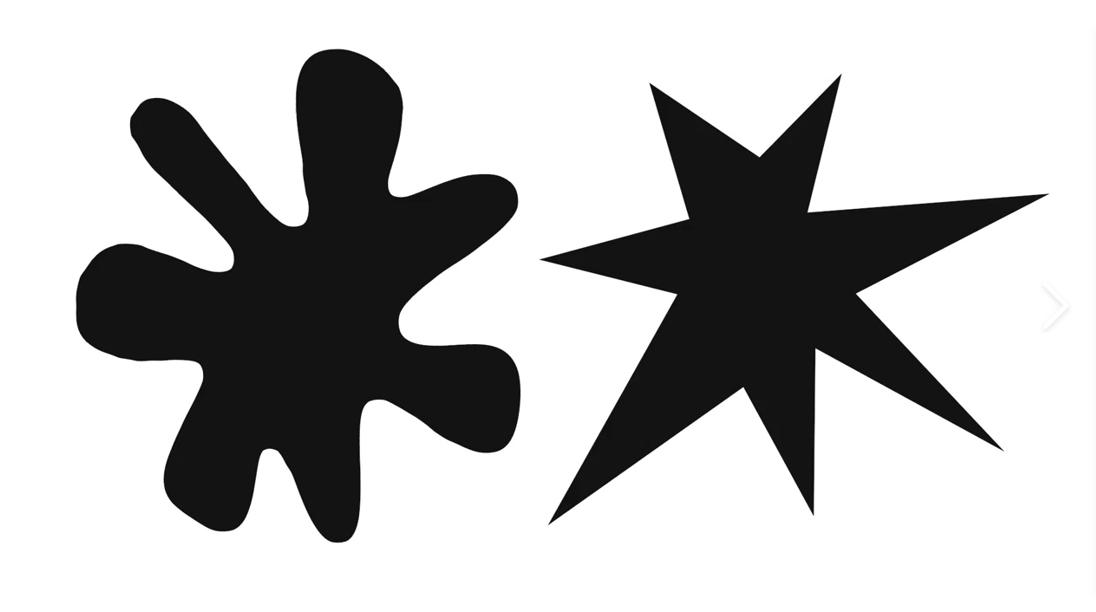
Two abstract shapes in the experiment
The findings from the experiment conducted nearly 100 years ago are now recognized globally as “Bouba & Kiki” Effect: regardless of the country, the word “bouba” was repeatedly associated with the round, curvy symbol whereas “kiki” was consistently matched with the sharp-angled shape. Across linguistic groups, bouba was described using similar-sounding words such as bulbous or blobby, while kiki was described as prickly or spiky.
If seemingly arbitrary words like ‘bouba’ and ‘kiki’ can evoke such vivid associations, it prompts us to consider the implications for a brand name and how it sounds in the context of sound naming.
We have long considered that language was arbitrary – but the sound of a name can be mapped to senses, experiences or objects in the world around us.
Consider the word “mother” used around the world: Ma, Mutti, Mama, Mutter, Eomma, Amman, Mamotchka, and so forth. The sound “ma” is repeated across countries. Just as “bouba” requires the mouth to make a rounded shape to produce the name aloud, “ma” requires the same shape we use when we first open our mouths to eat – hence, the first and easiest sound to be said aloud by a baby. Across the globe, the “ma” sound evokes an idea of comfort, maternal protection and softness.
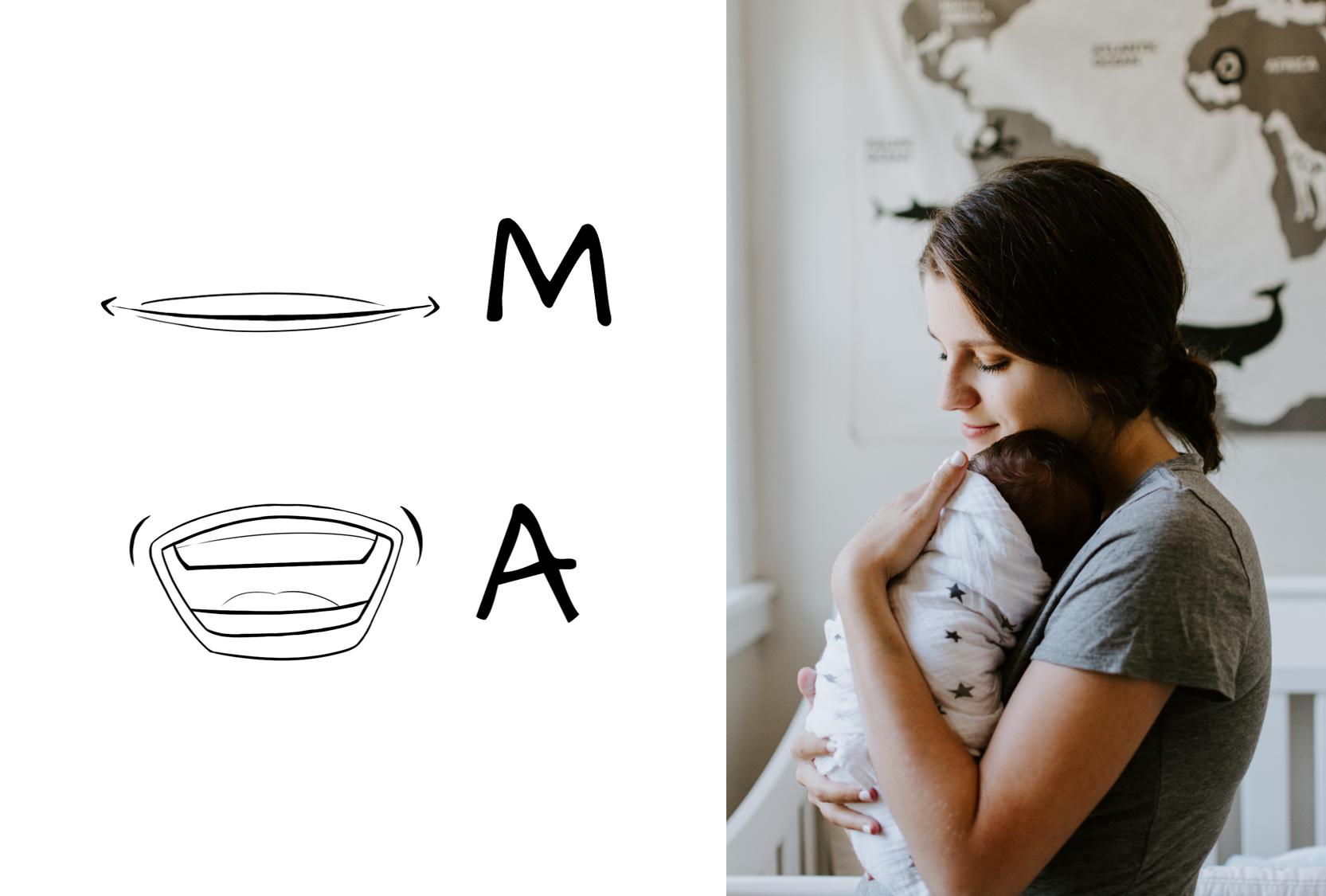
The “ma” sound evokes an idea of comfort, maternal protection and softness
Sound symbolism, as it is called, is analyzed by scientists across many different languages. Global findings point to the fact that most languages use a front-vowel sound (such as “ee” in feet) for words that indicate something that is little or tiny: petit, piccolo, klein. And for words that indicate something large, languages tend to use back-vowel sounds (such as “oo” in food or “ah” in bought): grand or grande. Depending on the employed consonant, vowel, and length of the vowel (long versus short), the sound symbolism of a name can represent a unique sensory experience just on the basis of sound.
We experience this observation daily when conducting global linguistic checks on names we’ve created. When asking about keywords and projected types of products for a given arbitrary name, we see similar patterns across countries. Some letters and sounds will evoke a universe that is cold, distant, or technological while others may impart a sense of warmth and softness.
Sound symbolism opens greater opportunity and a direct link for names to convey a sensory experience or an emotion beyond meaning.
In his book Dictionary of Language Lovers, French linguist Claude Hagège wrote that “many languages possess … ideophones, or words that offer a sound painting of an idea, to symbolize a state, a sensory impression, a way of being or moving, an action that is not necessarily reproducing itself from a noise.” From Hagège’s definition, we can infer that the creation of brand names should leverage the power of ideophones to evoke an idea in sound and leave a vivid impression of certain sensations or sensory perception across manner, color, sound, smell, action, state or intensity.
Renault’s Kadjar best captures an example of an ideophone. The name for this SUV model created by Labbrand is composed of sharp, short and repetitive sounds that make you open and close mouth very rapidly. The combination of the two syllables in Kadjar conveys an incisive sense of a “cut” in the symbolism as well as spaciousness, conveying both speed and size.

Source: Renault’s Kadjar
But sound is not the only factor shaping perception in the making of meaning. It is the complex combination of other subtle details including rhythm, length of the word, as well as the inherent degree of familiarity.
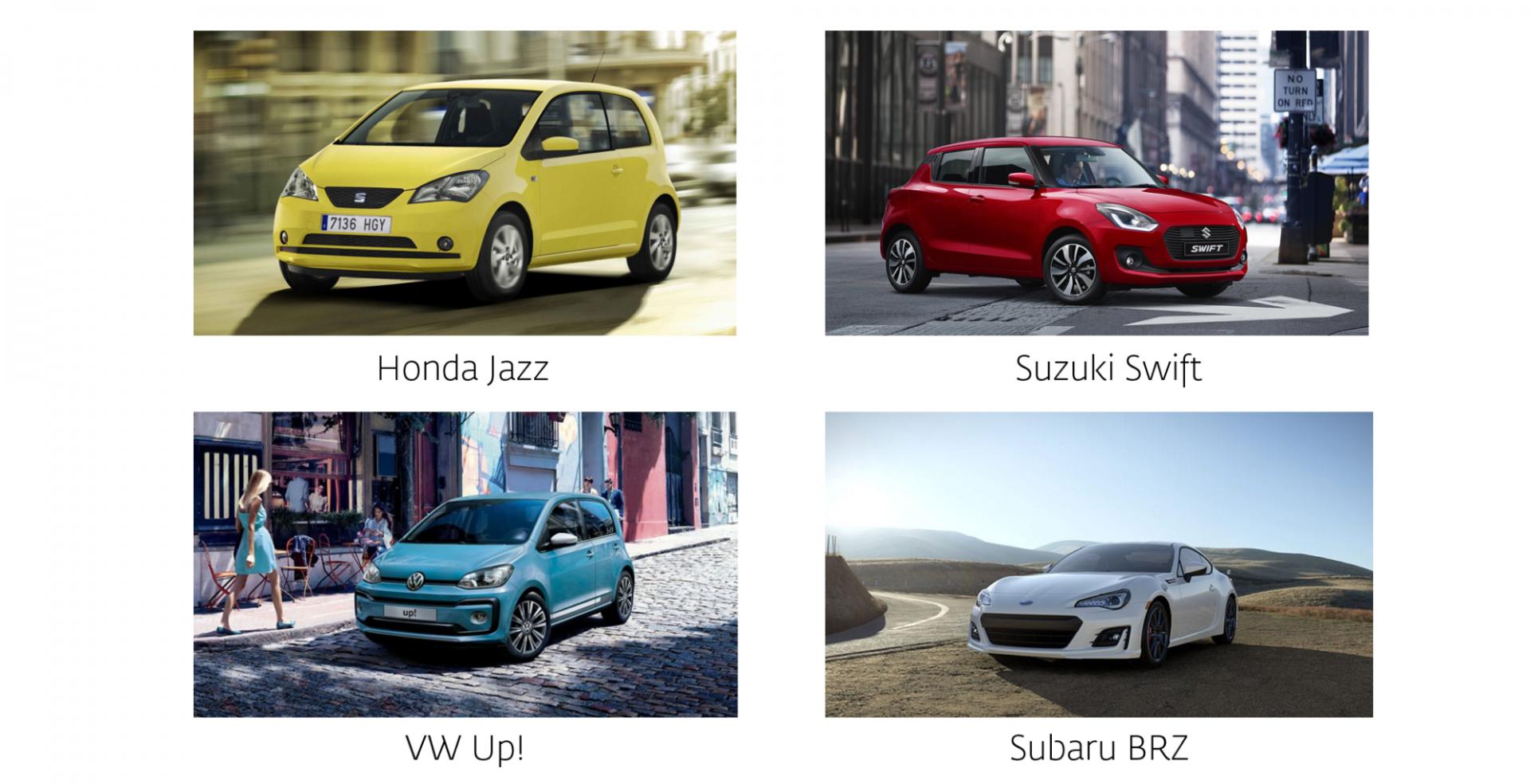
Take compact city cars for example: we see many short mono-syllable names that convey the idea of small, quick and easy car: Seat Mii, Up! VW Up! Suzuki Swift, Ford Ka+, Honda Jazz – all compact names for a compact car.
The Subaru BRZ offers another interesting example leveraging both length and familiarity to its advantage: the brevity of the three-letter name, as well as the subtle nod to the notion of an effortless “breeze” perfectly captures the impression of cruising around in a swift and agile sports car.
Sound, rhythm, word length, and the origin of a brand name all convey nuanced information about the brand’s qualities, such as size, shape, smoothness, or distance. Even when a brand name appears seemingly arbitrary, it’s highly likely that this apparently random choice plays a silent but significant role in shaping consumers’ perceptions. Consequently, it has the potential to impact the global performance of a brand name by striking a distinct emotional chord with customers. Sound naming, in its unique way, influences how we connect with brands and their experiences.
Here are the 3 key takeaways to leverage sound in the creation of a name:
1. Explore the imaginary of the brand experience using your senses before creating a name. Start with a projective technique: If your brand were a letter, a sound, a smell, a shape, a musical note…
2. Use sets of oppositions to define your brand experience. The oppositions should depend upon the brief and the context, but a few common oppositions include:
Brief VS long
Simultaneous VS Consecutive
Close VS Distant
Small VS Big
Open VS Close
High VS Low
Masculine VS Feminine
Round VS Sharp
Light VS Dark …
3. Beware of shortcuts. Just as unique combinations can create striking designs, the same holds true with naming. While a letter in itself is not enough to convey a sensation, the association of vowels and consonants, combined with a specific rhythm and length will create the best name.
Creating a name worthy of building a brand universe around it will require us to take a “bouba/kiki” approach to naming. When meticulous attention is paid to the combination, length, rhythm and sound of letters and words, we unlock greater nuance and texture of meaning. By tapping into perceptual patterns proven to travel the globe, a name can have the effect of tapping into the senses while evoking a vivid image for anyone who encounters it.




To improve your experience, we use cookies to provide social media features, offer you content that targets your particular interests, and analyse the performance of our advertising campaigns. By clicking on “Accept” you consent to all cookies. You also have the option to click “Reject” to limit the use of certain types of cookies. Please be aware that rejecting cookies may affect your website browsing experience and limit the use of some personalised features.