
Search for content of interest

  • About
  • ServiceS
    • Branding
    • Innovation
    • Naming
    • Strategy
    • Research
    • Design
  • Work
  • Insights
  • News
  • LOCATIONS
    • Shanghai
    • Paris
    • New York
    • Singapore
    • Malaysia

CN FR
  • About
  • ServiceS
    • Branding
    • Innovation
    • Naming
    • Strategy
    • Research
    • Design
  • Work
  • Insights
  • News
  • LOCATIONS
    • Shanghai
    • Paris
    • New York
    • Singapore
    • Malaysia
CONTACT

EN

  • CN
  • FR

Home Insights Our Thinking Detail

EXPERTISE

  • Innovation
  • Strategy
  • Branding

REGION

  • Global
Contact Us

How To Plan Overseas Brand Growth?

Going global means more than just export

Far from being an abstraction, branding is a set of tools and methods meant to support business growth. Nowhere is this more obvious than in business globalization. No matter the industry, branding is a critical component of entering foreign markets and building a stable, profitable business abroad. Moreover, as economies move up the value chain, branding becomes increasingly central to the success of companies seeking to go global. It is thus more important than ever for senior decision-makers to fully integrate the branding dimension into their plans for globalization.
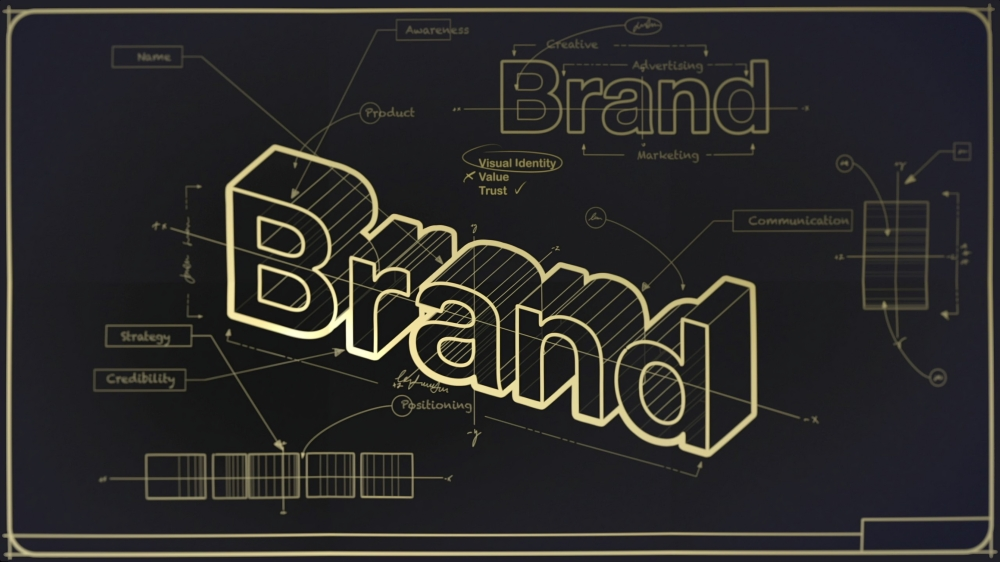
What are different dimensions of overseas brand growth?

Making branding support overseas growth means more than a local language name or slogan. Different tools and methods must be deployed to achieve systematic brand building:

  • Consumer research – businesses going global typically rely on macro channel data but often lack an understanding of their consumers. Qualitative methods of market research are critical to achieve the necessary understanding of local values, lifestyle, and culture necessary to get real product and brand market fit.
  • Positioning – strategy for foreign expansion should not be limited to pricing and channel mix. The right brand positioning will allow companies to use their competitive advantage to the maximum and establish defendable points of differentiation in new markets. This tool can be used as part of a strategy to disrupt mature markets or to develop new profitable niche segments.
  • Naming and design – it is common for the best-laid globalization plans to be foiled by a brand identity unsuited to local market conditions. When thinking about naming and design for globalization, brands must look beyond purely aesthetic qualities and deeply consider the cultural resonance of their brand identity and the suitability of brand assets to local communication channels.
  • Experience – a reliable measure of the strength of a brand can be found in the quality of its experience. From customer service to retail environments, CRM etc… winning brands don’t just compete on products but create memorable interactions that create a feeling of proximity and empathy with consumers.
  • Communication – it is common for companies to focus on broad reach when communicating in new markets. The right communication strategy must combine channels and content to create emotional and cultural resonance.
  • Culture and management – an often-overlooked dimension of brand globalization, culture and management are nonetheless critical to such endeavors. Building a global brand means create a culture of cultural empathy, openness and cross-border collaboration and maintaining the right management processes to sustain this culture.

As we can see, overseas brand growth required coordinated action across a wider range of items, all of which are highly practical and directly connected to short and long term business growth.

What are the steps and milestones for overseas brand growth?

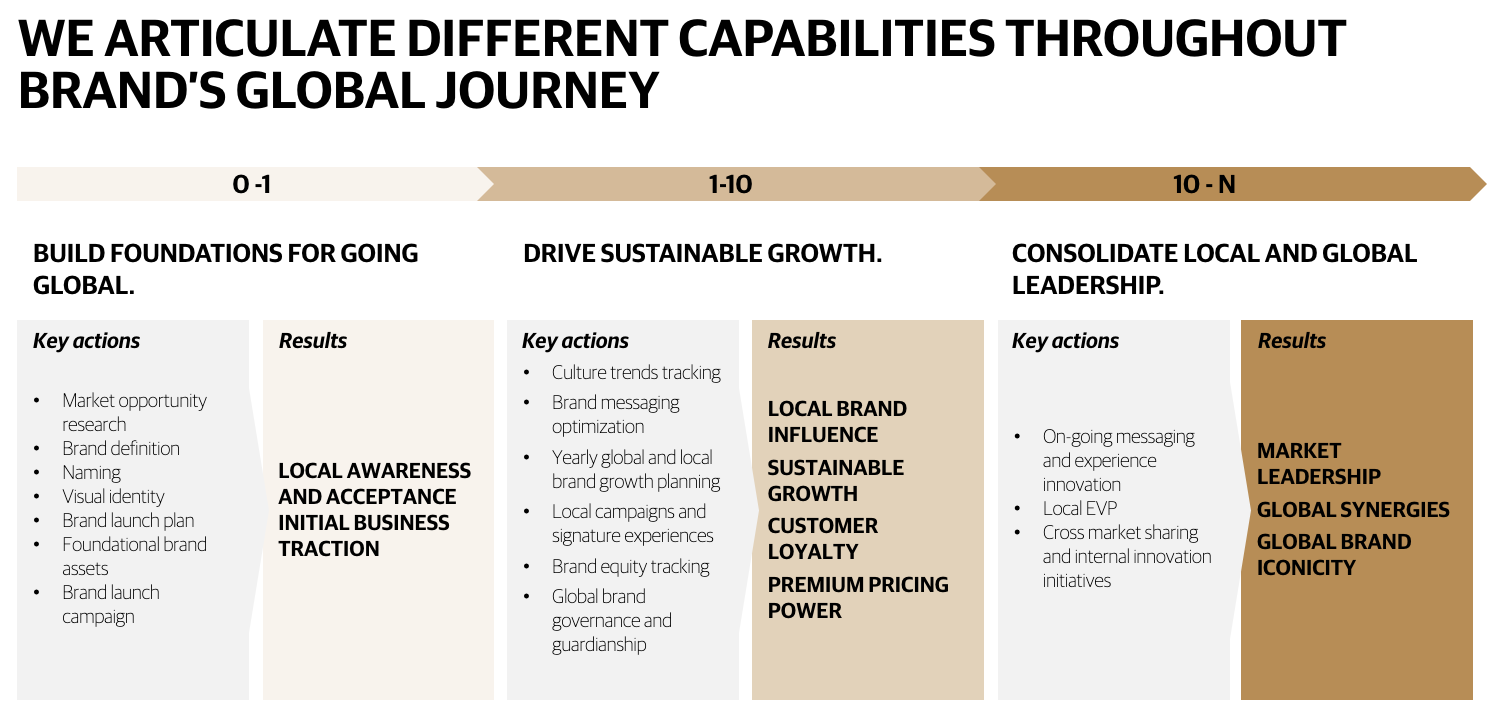
Brand building in foreign markets, especially those geographically and culturally removed from the brand’s country of origin, is a long-term effort. A question often raised by decision makers is that of timing: which items to focus on in the short term? How to pace investment? What KPIs and milestones should be kept track of?

Based on these questions, Labbrand has developed a simple model outlining the key phases, work steps and strategic milestones for overseas brand building. Such a model can be used by brands at the start of their going global journey or by more mature companies to audit their progress and plan next steps.
Would like to learn more insights on overseas brand growth? Click “Contact Us” on the left to connect with Labbrand’s branding expert!


  • SHARE
  • 
  • 
  • 
  • 
BACK

Sign up for our newsletter to get the latest insights, tips, and trends in branding, naming and innovation.

Related Article




Chinese Báijiǔ Branding Strategy

Decoding the Essence: Báijiǔ Branding Strategy Unveiled China's rich tradition of hospitality finds expression in the ritual of toasting with báijiǔ, a traditional distil…

Auto Shanghai 2015: New-Energy Vehicles’ Naming Strategy

New-energy vehicle (NEV) is no not a new term for Chinese consumers. The Tesla fever has been burning for a few years. The government has also implemented a subsidy polic…

Brand Awareness: Who owns “App”? The battle for generic names for brands

Apple and Amazon In 2001, Apple inaugurated its inaugural store in the United States, marking a pivotal moment in the company's history. Subsequently, the introduction of…

GREE’s Branding Journey: Made in China, Loved by The World

Dong Mingzhu, Chairperson and President of GREE, recently went on the real-life show “Workplace Newcomers”, which caused a bit of a stir on the internet and brought GREE …

Malaysia Truly Asia? Examining Malaysia’s Positioning in SEA 

The "Malaysia Truly Asia" campaign has been a cornerstone of Malaysia's tourism branding since its inception in 1999. The campaign aimed to portray Malaysia as a microcos…

The RedNote Effect and The New ‘Made In China’

Feb 13, 2025 For years, Chinese brands have fought an uphill battle in the U.S. with less-than-ideal country branding. While a “Made in China” stigma remains a hurdle for…

안녕하세요!What Does Korean Culture Bring to Brand Naming

Unveiling Korean Brand Naming Trends: How Culture Shapes Brand Names From Samsung, Korea’s homegrown tech giant that rivals Apple, to the natural skincare brand Innisfree…

How to Create a Brand Strategy That Sticks: 6 Proven Tips

Creating a strong brand involves more than visual design or creative campaigns; it demands an end-to-end approach that integrates and aligns every touchpoint with overarc…

Ready to take your brand to new heights?

Let's start a conversation.
  • NEWSLETTER
  • CAREERS
  • PRIVACY POLICY
  • Labbrand Group
  • Labbrand
  • Madjor
  • SpringPillar

* Will be used in accordance with our Privacy Policy

A Labbrand Group Company © 2005-2025 Labbrand All rights reserved

沪ICP备17001253号-3
  • Follow us:
  • 
  • 
  • 
  • 
  • 
  • 

Contact us to get the latest insights, tips, and trends in branding, naming, and innovation.

* Will be used in accordance with our Privacy Policy

Cookie Notice

To improve your experience, we use cookies to provide social media features, offer you content that targets your particular interests, and analyse the performance of our advertising campaigns. By clicking on “Accept” you consent to all cookies. You also have the option to click “Reject” to limit the use of certain types of cookies. Please be aware that rejecting cookies may affect your website browsing experience and limit the use of some personalised features.

Accept Reject