Search for content of interest

  • About
  • ServiceS
    • Branding
    • Innovation
    • Naming
    • Strategy
    • Research
    • Design
  • Work
  • Insights
  • News
  • LOCATIONS
    • Shanghai
    • Paris
    • New York
    • Singapore
    • Malaysia

CN FR
  • About
  • ServiceS
    • Branding
    • Innovation
    • Naming
    • Strategy
    • Research
    • Design
  • Work
  • Insights
  • News
  • LOCATIONS
    • Shanghai
    • Paris
    • New York
    • Singapore
    • Malaysia
CONTACT

EN

  • CN
  • FR

Home Insights Our Thinking Detail

EXPERTISE

  • Strategy

INDUSTRY

  • Auto
Contact Us

Auto Brand Positioning: Buick Selling the American Dream

As we mentioned before, the new General Motors consists of four core brands with excellent auto brand positioning, including Buick, Cadillac, Chevrolet and GMC. Chevy is the top selling GM brand in the US, Cadillac’s edgy luxury car is fairly popular among young people, and GMC is GM’s truck line. So why keep Buick? Some say it’s because of China.

In the United States, Buick positions itself as an entry-level luxury brand, which places it between the economical Chevy and the luxury Cadillac. Moreover, Buick’s average demographic was over 70 plus a few years back 1,which could make Buick the last brand a person might buy in his or her lifetime. While Buick’s vehicle is still among the most dependable vehicles of all brands 2, it is seen as a sedan for senior citizens by many young Americans. 

But it’s a different story in China, where Buick’s sales are still booming as a result of their effective brand positioning. Buick is in effect selling Chinese consumers The American Dream, giving them the feeling that they can achieve a better, richer, and happier life. 

GM first introduced 1936-estabilshed Buick Century under the name of Buick New Century in China in 1999, when the Chinese auto industry was only capable of manufacturing one million cars a year. Unlike the time when Century was introduced to the American customers, the New Century actually coincided with the coming of 21st century. New Century quickly became popular among upscale, professional families in China. The brand positioning as well as the evocative brand name contributed to the success of this model. 

Then GM introduced the Buick GL8. Similar minivans like Buick Terraza and Pontiac Montana were designed for suburban families in United States 3. But in China, GL8 is a status symbol. GM positioned GL8 as “business class on land”, which again captured the elite class. GL8, mainly sold in China, is now widely used for business purposes. 

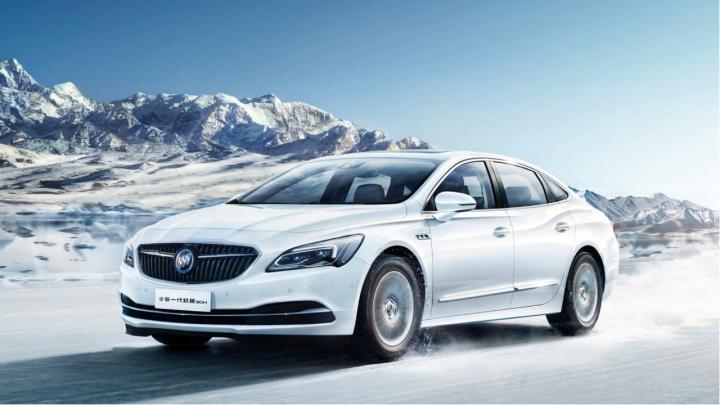
Now the Buick Regal and the more upscale Buick LaCrosse are available in China. The two mid-sized vehicles are both positioned as luxury cars. Regal was given the Chinese name 君威 (jūnwēi), meaning a king’s might, while LaCrosse was named 君越 (jūnyuè), meaning a king’s advancement. Shanghai GM, a joint venture between General Motors and Shanghai Automotive Industry Corporation, has just launched the next generation of LaCrosse in early July. The success of the two brands even created rumors that GM was considering bringing back Regal to North America in 2012 after it was replaced by LaCrosse in 2004. 

As GM’s main brand in China, Buick helped GM’s 2008 car sales increase 6.1 per cent in the world’s largest car market, while GM’s sales back home plunged a whopping 22.9 per cent during the same period. Over the years, Buick’s effective brand positioning helped GM to become the best-selling foreign automaker in China 4.

References

http://www.jdpower.com/corporate/news/releases/pdf…

http://www.msnbc.msn.com/id/12801549/ns/nightly_ne…

  • SHARE
  • 
  • 
  • 
  • 
BACK

Sign up for our newsletter to get the latest insights, tips, and trends in branding, naming and innovation.

Related Article




Platform Brands in Fintech: Designing for Trust

Platform brands exist in every industry, but the considerations are not all the same. In finance, where hundreds of companies now specialize in using new technology to of…

Brand Architecture Strategy: Expertise to Guide the Way for Clarity

This article is part of our Brand Architecture series, where we clarify and identify best practices in brand architecture strategy that guides brand growth. Intro Brand a…

Understanding Gen Zs in Asia – Their Expectations and Influence on Brands

The growing new-age consumers As one of the fastest growing and most distinctive consumer segments globally, Gen Zs are those who are born in the late 1990s to early…

Changyu’s brand strategy: unique grapes and Chinese culture

SIAL Group, a leading Food & Beverage industry trade organizer globally, has recognized Changyu, a prominent Chinese winemaker, as one of the top 30 wine brands world…

Brand Awareness: Who owns “App”? The battle for generic names for brands

Apple and Amazon In 2001, Apple inaugurated its inaugural store in the United States, marking a pivotal moment in the company's history. Subsequently, the introduction of…

Brand Strategy-The Ultimate Olfactive Application: Scented Laptop

Are you in search of a laptop that seamlessly integrates cutting-edge technology while captivating your senses? Your quest ends here! Asus, the renowned creator of the Ee…

Fragmented Time in China: How Chinese Spend 3.9 Hours on Smartphones Every Day

Fragmented Time in China is a unique phenomenon defined by consumers as the numerous instances during the day when there's free time to spare – whether waiting for someon…

Taglines, Slogans, and the Art of Verbal Branding

Crafting a powerful tagline is a crucial aspect of verbal branding. Take Nike's iconic "Just Do It," for example—a succinct, inspirational phrase that catapulted the bran…

Ready to take your brand to new heights?

Let's start a conversation.
  • NEWSLETTER
  • CAREERS
  • PRIVACY POLICY
  • Labbrand Group
  • Labbrand
  • Madjor
  • SpringPillar

* Will be used in accordance with our Privacy Policy

A Labbrand Group Company © 2005-2025 Labbrand All rights reserved

沪ICP备17001253号-3
  • Follow us:
  • 
  • 
  • 
  • 
  • 
  • 

Contact us to get the latest insights, tips, and trends in branding, naming, and innovation.

* Will be used in accordance with our Privacy Policy

Cookie Notice

To improve your experience, we use cookies to provide social media features, offer you content that targets your particular interests, and analyse the performance of our advertising campaigns. By clicking on “Accept” you consent to all cookies. You also have the option to click “Reject” to limit the use of certain types of cookies. Please be aware that rejecting cookies may affect your website browsing experience and limit the use of some personalised features.

Accept Reject