Search for content of interest

  • About
  • ServiceS
    • Branding
    • Innovation
    • Naming
    • Strategy
    • Research
    • Design
  • Work
  • Insights
  • News
  • LOCATIONS
    • Shanghai
    • Paris
    • New York
    • Singapore
    • Malaysia

CN FR
  • About
  • ServiceS
    • Branding
    • Innovation
    • Naming
    • Strategy
    • Research
    • Design
  • Work
  • Insights
  • News
  • LOCATIONS
    • Shanghai
    • Paris
    • New York
    • Singapore
    • Malaysia
CONTACT

EN

  • CN
  • FR

Home Insights Our Thinking Detail

EXPERTISE

  • Strategy
  • Innovation
Contact Us

Changyu’s brand strategy: unique grapes and Chinese culture

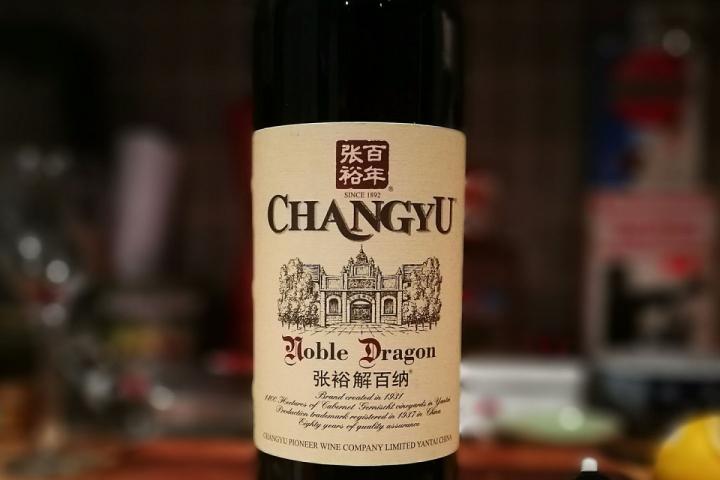
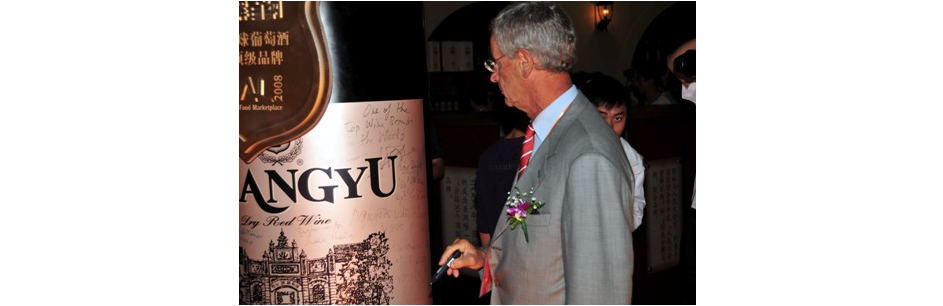
SIAL Group, a leading Food & Beverage industry trade organizer globally, has recognized Changyu, a prominent Chinese winemaker, as one of the top 30 wine brands worldwide. As the sole Asian recipient of this prestigious award, Changyu stands out in the international wine market. Yves Benard, president of the International Organisation of Vine and Wine (OIV), lauded Changyu as “one of the world’s top wine brands.” Explore the brand strategy of Changyu, a distinguished player in the global wine industry.

Considered to be a shining star of the Chinese wine industry, Changyu has already entered the mainstream market in the US, with loyal customers in major cities such as San Francisco and New York. This is an uncommon feat for an Asian wine brand, as American consumers are known for their discerning taste in wines.
Elevating Changyu’s presence with a strategic focus on brand keywords, our commitment to quality and heritage becomes evident. Since 1937, Changyu has been a trailblazer, officially registering the “Changyu Cabernet” brand, marking a historic milestone as China’s inaugural dry red wine brand. As part of our brand strategy, British wine merchant Bibendum emphasizes to their customers that Changyu wines are meticulously crafted at the Changyu Wine Company, the nation’s oldest winery located in Shandong Province. Uncover the exceptional quality and rich history of Changyu, where brand strategy meets a legacy of excellence in every bottle.Bibendum also points to the wine’s unique fragrance as a notable feature. The fragrance is thought to be closely related to the main raw material of Changyu: Gernischt, the only grape breed acknowledged worldwide as having been cultivated by Chinese people. More than a hundred years ago, Gernischt was transplanted to China by Changyu. After a century’s improvements and developments, it has now integrated with the local conditions of Yantai, forming its own features and tastes. When overseas customers have s sip of Changyu, they are said to be tasting the flavor of one hundred years of history—an exotic Chinese flavor and fragrance different from those found in European and American wines. This cultural differentiation has succeeded in attracting curious consumers.
Changyu’s brand strategy aims to redefine this traditional Chinese brand as both a domestic and international luxury brand. In doing so, the company hopes to attract foreign wine lovers as well as a new class of Chinese elites, all looking for ways to experience the exotic cultural history of China.

brand strategy
  • SHARE
  • 
  • 
  • 
  • 
BACK

Sign up for our newsletter to get the latest insights, tips, and trends in branding, naming and innovation.

Related Article




The Trademark Battle between Adidas and Adivon, a brand that represents the grass-roots of China?

When it comes to trademark, it is a continuing battle in China. In May 2013, the 5-year trademark dispute between sportswear giant Adidas and local brand Adivon has final…

6 Essential Services a Full-Service Market Research Agency Must Offer

Market research plays a pivotal role in helping brands identify the evolving needs of consumers. In a dynamic market like Singapore, widely regarded as the business capit…

Brand Naming Differentiation in Greater China: Examples from the Automobile Industry

Car Brand Names - Linguistic, Cultural, and Economic Concerns of Brand-Locality Inconsistencies the Greater China market For decades, the appeal of the Greater China mark…

When the Going Gets Tough: The Case for Brand-led Market Research

Discover the power of brand-led market research in the dynamic landscape of the Chinese economy. From the historical significance of agriculture to the dominance of manuf…

The LEGO Dilemma: Why Distinctiveness Matters for Chinese Brand Naming

Exploring Chinese Brand Naming: The Uniqueness of LEGO Yesterday as browsing through a fashion magazine, I stumbled upon a special feature on LEGO, titled in bold, big fo…

LABBRAND: A Top Research Agency in China That Turns Insights Into Action

In China’s fast-shifting consumer landscape, research is not just about collecting data — it’s about uncovering the cultural meaning behind behavior. As a top research ag…

Brand Building – A Ride in the East: Is JustGrab Winning Over Ride-Sharing Hearts in Singapore?

As Uber reshaped transportation dynamics globally in 2011, its influence echoed in the Asian market, giving rise to similar platforms like Didi, Grab, and Go-Jek. While U…

Gen Z & the Future of the Metaverse

A new virtual future. An evolution of the internet – the metaverse is a continuum of immersive, realistic digital experiences that are made available through integrated v…

Ready to take your brand to new heights?

Let's start a conversation.
  • NEWSLETTER
  • CAREERS
  • PRIVACY POLICY
  • Labbrand Group
  • Labbrand
  • Madjor
  • SpringPillar

* Will be used in accordance with our Privacy Policy

A Labbrand Group Company © 2005-2025 Labbrand All rights reserved

沪ICP备17001253号-3
  • Follow us:
  • 
  • 
  • 
  • 
  • 
  • 

Contact us to get the latest insights, tips, and trends in branding, naming, and innovation.

* Will be used in accordance with our Privacy Policy

Cookie Notice

To improve your experience, we use cookies to provide social media features, offer you content that targets your particular interests, and analyse the performance of our advertising campaigns. By clicking on “Accept” you consent to all cookies. You also have the option to click “Reject” to limit the use of certain types of cookies. Please be aware that rejecting cookies may affect your website browsing experience and limit the use of some personalised features.

Accept Reject