

For decades, “Made in China” followed a clear trajectory. Step by step, China earned a global recognition that was fundamentally functional: Chinese products are leaders in technology, usability and quality.
But as Chinese brands move deeper into global markets, a more fundamental question is emerging — one that cannot be answered by product strength alone:
Beyond products, what exactly is China exporting?
From our perspective working with Chinese brands going global, the pattern is clear. Most companies have already built strong Leadership Power, anchored in product performance, efficiency, and scale.
But the next frontier is no longer about what you make. It is about what people experience when they encounter you.
This is where a new dimension becomes critical: Experience Power.
At the macro level, this shift is no longer optional. In 2026, “Chinese service brands” was explicitly included in China’s government work report alongside “Made in China,” marking a structural upgrade from manufacturing capability to service and experience capability.
The signal is clear: China is moving from exporting products to exporting experiences.
Experience is not a soft layer added on top of product. It is becoming a structural driver of global competitiveness.
1) Experience is the only real escape from price competition
In global expansion, product performance is increasingly converging. Specifications can be benchmarked. Prices can be matched. Supply chains can be replicated.
What cannot be easily copied is how a brand is felt over time.
For many Chinese brands abroad, the first phase of growth is product-led adoption. The second phase is where pressure emerges: competition shifts from market entry to value retention.
At this stage, experience becomes the only durable differentiator.
A product may win trial. But experience drives repeat. A price advantage may unlock entry. But experience defines margin.
2) Experience is the gateway to China’s emerging service brands
A second shift is emerging in parallel.
Across hospitality, F&B, lifestyle retail, mobility services, and new consumer formats, a new generation of Chinese brands is no longer exporting products — they are exporting service systems.
For these brands, experience is no longer support infrastructure. It is the product itself.
This creates a shared strategic question for both product-led and service-led companies:
How do we build an experience system that is both culturally grounded and globally legible?
Which leads to a more fundamental question:
What is “Chinese experience”?
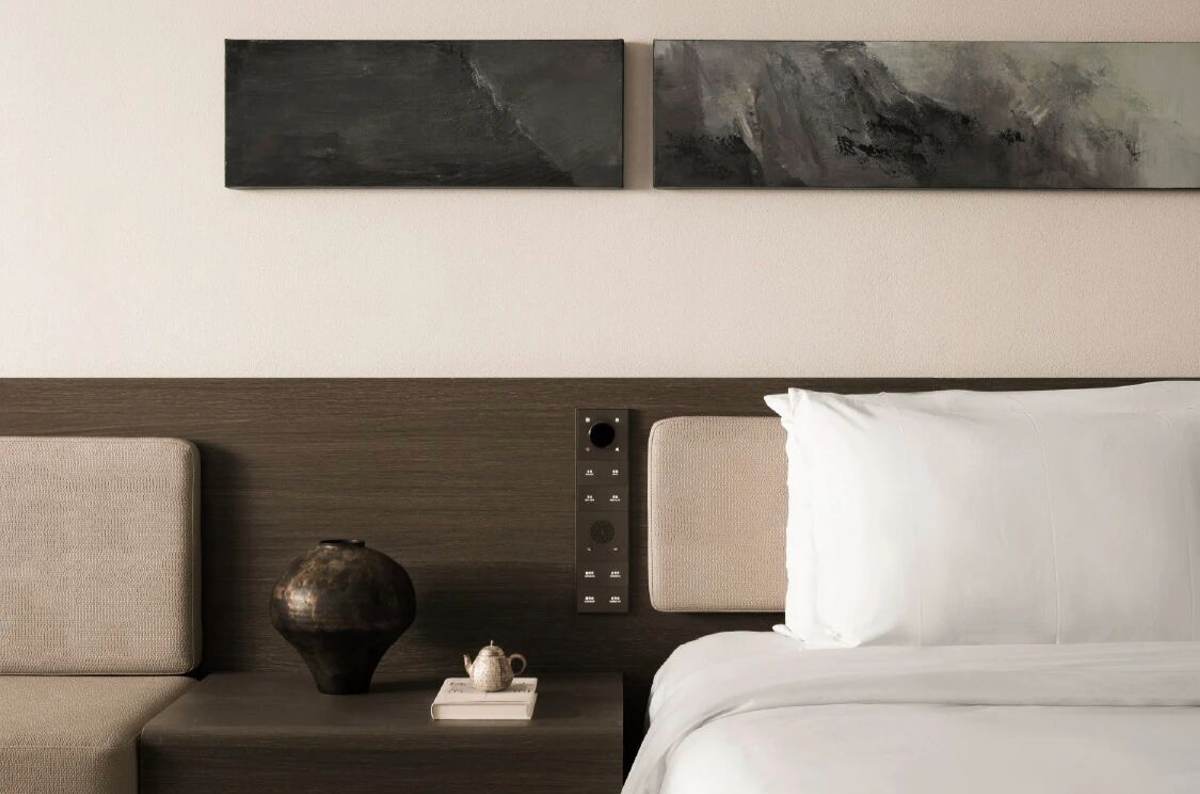
Chinese experience is a culturally rooted logic of human care translated into observable, repeatable behavior.
The key is not cultural form. It is cultural logic expressed through action.
Global service cultures share this same structure: they are not ideas, but behavioural systems that create memory.
Each has a visible surface. But behind it lies a deeper cultural operating logic.
So what defines Chinese experience?
It is not “a cup of tea.” It is recognizing arrival, and using a moment of care to help someone settle in.
It is not “a bowl of porridge.” It is reading fatigue, timing, and emotional state — and responding before it is expressed.
It is not “a bottle of hot water.” It is an assumption that care should adapt to human condition, not the reverse.
This is one expression of Chinese experience, represented in hospitality systems such as ATOUR.
But it is not the only one.
Through cultural and consumer research, we identify five core territories of Chinese experience — five ways Chinese brands can build differentiation rooted in cultural logic:
These are not stylistic choices. They are cultural operating systems.
And critically, they are not mutually exclusive — they can be combined into full experience architectures spanning physical space, digital touchpoints, and human interaction.
There is no single formula for Chinese experience.
Different brands will express it differently depending on category and market context. But the strategic requirements are becoming consistent:
The shift is clear:
From cultural instinct → to behavioural system → to global experience language.
If the past 40 years were defined by Chinese manufacturing, the next decade will increasingly be defined by Chinese service and experience systems.
This does not mean exporting culture. It means exporting a structured way of delivering care, trust, and attention through experience design.
For Chinese brands going global — whether product-led or service-led — experience is becoming the second growth curve of international expansion.
At Labbrand, we believe every brand already carries within it a culturally rooted logic of experience.
The task is not to invent it.
The task is to translate it into a system the world can understand — and feel.




To improve your experience, we use cookies to provide social media features, offer you content that targets your particular interests, and analyse the performance of our advertising campaigns. By clicking on “Accept” you consent to all cookies. You also have the option to click “Reject” to limit the use of certain types of cookies. Please be aware that rejecting cookies may affect your website browsing experience and limit the use of some personalised features.